Nutrition
Mediterranean
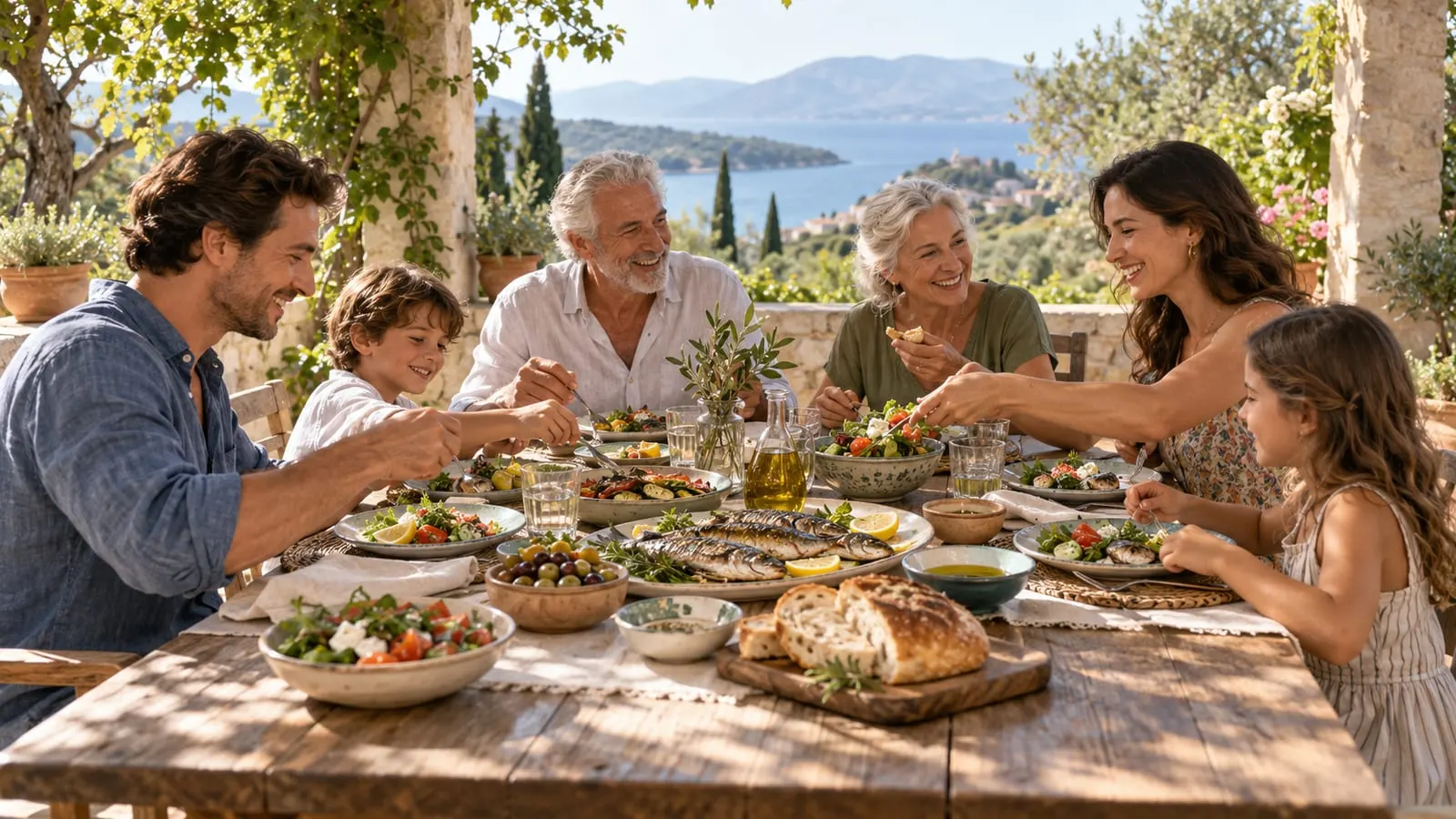
Based on traditional eating patterns of countries bordering the Mediterranean Sea. Emphasizes whole foods, healthy fats, and moderate wine consumption. Consistently rated among the healthiest diets.
- Type
- Balanced
- How hard to stick to
- Easy
- Protein / carbs / fat
- 20 / 45 / 35%
The short version
People usually choose it for heart health, longevity, overall wellness and sustainable lifestyle.
Meals: 3 meals with small snacks, social eating encouraged.
What you eat
- Olive oil
- Fish & seafood
- Whole grains
- Vegetables
- Fruits
- Nuts & seeds
- Legumes
- Herbs & spices
- Moderate red wine
- Yogurt & cheese
What you cut back on
- Processed meats
- Refined grains
- Added sugars
- Trans fats
- Highly processed foods
- Sugary beverages
A day of eating
One day built from the Mediterranean recipes in the For The Reps app. It comes to about 1,407 calories and 105 g of protein, so scale portions up or down to suit you.
| Meal | Dish | Calories | Protein |
|---|---|---|---|
| Breakfast | Whole Grain Toast with Smashed Avocado and Sardines | 401 | 23 g |
| Lunch | Tuna and White Bean Salad | 411 | 40 g |
| Dinner | Grilled Swordfish with Caponata | 399 | 39 g |
| Snack | Apple Slices with Almond Butter | 196 | 4 g |
Macros
Roughly 20% of calories from protein, 45% from carbs and 35% from fat.
On 2,000 calories a day that is about 100 g of protein, 225 g of carbs and 78 g of fat.
Before you start
Wine consumption is optional. One of the most studied and recommended diets. Very flexible.
If you have a medical condition, are pregnant, or take regular medication, check with your doctor or a registered dietitian before changing how you eat.